


How Coffee Roasting Shapes Flavor Through Maillard, Caramelization, and Acidity Breakdown
A green coffee bean tastes nothing like the drink people love. It is dense, grassy, sharp, and often unpleasant on its own. The flavor people recognize as coffee appears only after heat rewrites the chemistry inside the bean.
Roasting is that rewrite. It turns raw plant material into a fragrant brown seed filled with notes that can suggest toasted bread, almonds, cocoa, caramel, berries, spices, smoke, or dark chocolate. The difference between a lively light roast and a heavy dark roast is not only time in the machine. It is the way heat guides three major chemical changes: the Maillard reaction, caramelization, and the breakdown of chlorogenic acids.
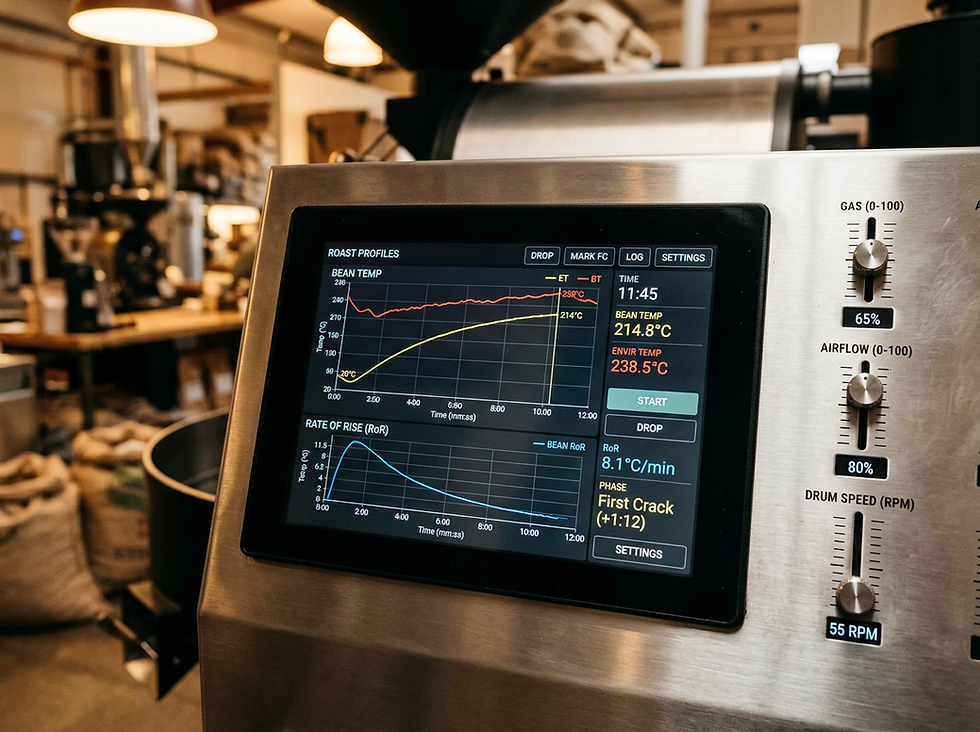
These reactions do not happen in isolation. They overlap, speed up, slow down, and compete for the same limited sugars, acids, and amino compounds. That is why roasting is both science and craft. A precise roaster, including machines like Rostino, gives the operator control over the temperature curve, airflow, and timing needed to shape the cup with intention.

Roasting is a controlled chemical journey
Coffee roasting starts with a hard green bean that contains water, sugars, proteins, organic acids, carbohydrates, lipids, and many aromatic precursors. Heat does not simply darken the bean. It changes its structure.
As temperature rises, moisture leaves the bean. The bean expands. Pressure builds inside. Its color moves from green to yellow, then tan, then brown. Aromas shift from hay and grain to bread, nuts, chocolate, fruit, caramel, spice, and smoke.
This progression depends on several controls:
Charge temperature
The temperature of the roaster when the beans enter.
Rate of rise
How quickly the bean temperature increases over time.
Airflow
How heat, smoke, and moisture move through the roasting chamber.
Development time
The time after first crack when flavor, sweetness, body, and roast character continue to build.
Final roast level
The point where the roast stops and cooling begins.
Small changes in any of these can change the cup. A roast that moves too fast may taste sharp, grassy, or thin. A roast that drags can taste flat or baked. A roast pushed too far may lose origin character and turn bitter, smoky, or ashy.
This is why How Coffee Roasting Shapes Flavor Through Maillard, Caramelization, and Acidity Breakdown is not just a chemistry topic. It is the core of flavor design.
The Maillard reaction builds coffee’s brown flavors
The Maillard reaction is one of the most important flavor-building reactions in roasted coffee. It happens when amino acids and reducing sugars react under heat. In coffee roasting, it becomes especially important as beans move through roughly 150°C to 200°C, or about 302°F to 392°F.
This reaction is complex. It creates many flavorful and aromatic compounds, and it also contributes to browning. The same broad reaction family gives browned bread crust, roasted nuts, seared meat, toasted malt, and baked pastries their appealing aromas.
In coffee, Maillard activity can produce notes such as:
Toasted bread
Hazelnut and almond
Cocoa
Malt
Brown sugar
Biscuit
Caramel-like depth
Light spice
The Maillard reaction also helps create melanoidins, brown compounds that affect color, body, and mouthfeel. These compounds do not just make coffee look roasted. They help give brewed coffee its roundness and perceived weight.
Why steady heat matters during Maillard development
The Maillard stage rewards control. If heat rises smoothly, the roast can build layered flavors. The cup may show sweetness, nuttiness, chocolate, and a clean finish.
If the temperature swings too much, the flavor can lose definition. Roasters often describe this as flatness. The coffee may still be brown, aromatic, and drinkable, but the layered complexity starts to blur. Instead of tasting like toasted almond, milk chocolate, and orange zest, it may taste generically roasted.
A stalled or overly slow Maillard phase can also create a baked taste. This may show up as dull bread, cardboard, or muted sweetness. A rushed Maillard phase can leave underdeveloped flavors, even if the outside of the bean looks roasted.
Good roasting keeps the reaction active without letting it run wild. Machines such as Rostino help by giving roasters repeatable heat application and closer control over the roast curve. The goal is not maximum heat. The goal is clean, even development.
Caramelization changes sweetness into deeper roast flavors
Caramelization begins when sugars break down under heat. In coffee, this becomes more active above about 170°C, or 338°F, though the exact experience depends on bean chemistry and roast conditions.
Green coffee contains sugars, including sucrose. As roasting continues, heat breaks these sugars into new compounds. Some contribute pleasant flavors. Others, when pushed too far, add bitterness and burnt notes.
Caramelization can create impressions of:
Caramel
Toffee
Butterscotch
Vanilla-like sweetness
Brown butter
Dark sugar
Toasted sugar
This sounds like it would always make coffee sweeter, but the reality is more subtle. Caramelization can create sweet aromas while reducing the bean’s actual sugar content. That means a darker roast may smell sweet and caramelly while tasting less naturally sweet than a well-developed light or medium roast.
The fine line between caramel and char
Caramelization is attractive until it goes too far. When sugars continue to break down under intense heat, the cup can move from caramel and dark chocolate toward smoke, ash, and burnt wood.
This is one reason dark roasts can taste bold but sometimes feel less complex. Many origin-specific notes fade as roast-driven flavors take over. A coffee that once showed peach, jasmine, and honey may become dominated by dark chocolate, smoke, and bitterness.
That does not mean dark roasting is bad. A well-executed darker roast can be rich, smooth, and satisfying. It may work beautifully for espresso or for people who enjoy heavy body and low perceived acidity. The issue is excess. Once the roast crosses into scorching or carbon-like bitterness, no brewing method can fully recover the lost sweetness.
A good roaster develops caramelization enough to add depth, but stops before pleasant roast character becomes harshness.

Chlorogenic acid breakdown changes brightness and body
Acidity is one of the most misunderstood parts of coffee flavor. In coffee, acidity does not mean sourness by default. It can mean brightness, liveliness, fruit character, and structure. A good acidic coffee may remind you of citrus, berries, apple, grape, or tropical fruit.
A major source of coffee acidity comes from chlorogenic acids. These compounds are naturally present in green coffee. During roasting, heat breaks them down. The longer and hotter the roast, the more they degrade and transform.
In lighter roasts, more of this acidic structure remains. The coffee may taste lively, floral, fruity, or tea-like. In darker roasts, more chlorogenic acids break down. The coffee often tastes lower in brightness, heavier in body, and more bitter.
This shift explains why roast level has such a strong effect on perceived acidity:
Roast level | Acidity | Body | Common flavor impression |
Light roast | Higher and brighter | Lighter to medium | Citrus, berry, floral, tea-like |
Medium roast | Balanced | Medium | Caramel, nuts, chocolate, ripe fruit |
Dark roast | Lower brightness, more bitterness | Fuller and heavier | Dark chocolate, smoke, roasted nuts, spice |
Acidity is not the enemy
Many coffee drinkers say they dislike acidity when they really mean they dislike sourness. Sourness often comes from underdevelopment, poor extraction, or both. Pleasant acidity feels clean and integrated. It makes coffee taste alive.
A light roast can be bright without being sour if the roast develops the bean fully. A medium roast can keep fruit character while adding sweetness and body. A dark roast can reduce brightness and create a heavier mouthfeel, but it should not need to taste burnt.
The breakdown of chlorogenic acids is one of the key reasons roast level changes the entire personality of coffee. It affects not only flavor, but also the sensation of weight on the tongue.
These reactions overlap inside the bean
It is tempting to imagine roasting as a neat sequence. First drying, then Maillard, then caramelization, then acidity breakdown. Real roasting is messier.
These reactions overlap. The bean is not the same temperature everywhere at once. The outer layers heat faster than the center. Moisture moves outward. Pressure builds. Aromatic compounds form, escape, or transform. The roaster must guide the whole bean, not just the surface.
A few practical examples show how tied together these reactions are:
A roast with strong Maillard development but restrained caramelization may taste nutty, sweet, and balanced.
A roast with short Maillard time and high final heat may taste sharp on one side and burnt on the other.
A roast with extended development may taste round and heavy, but it may lose fruit and floral detail.
A roast stopped too early may keep acidity, but the cup may feel grassy or underdeveloped.
This is why roast profiles matter. A profile is the planned path of heat over time. Two coffees can reach the same final color but taste different because they took different paths to get there.
Color gives clues, but it does not tell the full story.
Roast level changes flavor by changing chemistry
Light, medium, and dark roast labels are useful, but they can oversimplify the process. Still, they help explain how chemistry shapes flavor.
Light roasts preserve origin character
Light roasts usually stop soon after first crack begins or develops. They preserve more acidity and many delicate aromatic compounds. They often show the clearest connection to origin, variety, processing method, and growing conditions.
Common light roast notes include:
Lemon
Berry
Stone fruit
Florals
Honey
Tea
Fresh herbs
The challenge is development. A light roast must still cook the bean enough to avoid grassy, cereal-like, or sour flavors.
Medium roasts balance sweetness, acidity, and body
Medium roasts often give the broadest balance. Maillard flavors deepen. Caramelization becomes more noticeable. Acidity softens but usually remains present.
Common medium roast notes include:
Milk chocolate
Almond
Brown sugar
Caramel
Red fruit
Baking spice
For many coffees, this range gives a pleasing mix of origin character and roast sweetness.
Dark roasts emphasize body and roast character
Dark roasts push caramelization and acid breakdown further. They reduce brightness and increase bitterness, body, and roast-driven flavors.
Common dark roast notes include:
Dark chocolate
Toasted walnut
Molasses
Smoke
Clove
Charred sugar
The best dark roasts keep bitterness controlled. They feel full and rich without tasting like ash.
Precision roasting turns chemistry into repeatable flavor
Coffee roasting is full of variables. Bean density, moisture content, screen size, processing method, batch size, airflow, and drum speed can all change how heat enters the bean. A high-grown dense coffee often needs a different approach than a lower-density coffee. A natural process coffee may respond differently than a washed coffee from the same region.
Precision matters because flavor compounds form within narrow windows. If the roaster cannot control heat, the reactions become harder to repeat. One batch may taste sweet and layered. The next may taste hollow, sharp, or smoky.
Reliable roasting equipment helps solve this by giving control over:
Heat input
Airflow
Temperature tracking
Batch consistency
Cooling speed
Profile repeatability
Rostino machines fit into this idea of controlled roasting. They allow roasters to manage the heat journey with care, which is essential when the goal is not simply to make beans brown, but to produce a specific taste.
The operator still needs skill. A machine provides control, but the roaster makes decisions. Great roasting comes from reading the bean, knowing the desired cup profile, and adjusting the process before defects appear.
The cup reveals what happened in the roast
A brewed cup acts like a report card for the roast. It tells you where the chemistry landed.
A coffee with good Maillard development may show warmth, sweetness, and depth. A coffee with well-managed caramelization may offer caramel, toffee, or chocolate without harshness. A coffee with balanced acid breakdown may feel bright enough to stay lively but round enough to drink comfortably.
Common roast problems also show up clearly:
Cup defect | Possible roasting cause |
Grassy or hay-like | Underdevelopment or too little heat energy |
Flat and dull | Stalled roast or baked development |
Sharp and sour | Insufficient development or poor extraction |
Ashy or smoky | Excessive heat, over-roasting, or poor smoke management |
Bitter and hollow | Too much degradation of sugars and acids |
Buttery or caramel-like with balance | Strong caramelization without burning |
Brewing still matters, of course. Grind size, water quality, brew ratio, and extraction can improve or harm the cup. But brewing can only reveal what roasting created. It cannot add sweetness, complexity, or clean acidity that never formed in the bean.
Better roasting begins with tasting the chemistry
The best way to understand roasting is to taste the same coffee at different roast levels. Try a light, medium, and dark version of one origin if possible. Notice how the fruit changes. Notice when chocolate appears. Notice when body increases. Notice when brightness fades.
Then connect those sensory changes to chemistry:
Maillard reaction builds brown, nutty, toasted, and chocolate-like depth.
Caramelization creates caramel, vanilla-like, buttery, and dark sugar notes.
Chlorogenic acid breakdown lowers brightness and increases heavier, more bitter impressions.
Roasting is not just heat applied to beans. It is a controlled sequence of chemical choices. The roaster decides how much brightness to preserve, how much sweetness to develop, and how much roast character to allow.
A great roast does not happen by accident. It comes from guiding Maillard complexity, caramel depth, and acid transformation with care. When those forces line up, a hard green seed becomes a cup with clarity, sweetness, aroma, and balance.


Comments