


Roast Level Guide How Color and Temperature Shape Coffee Flavor
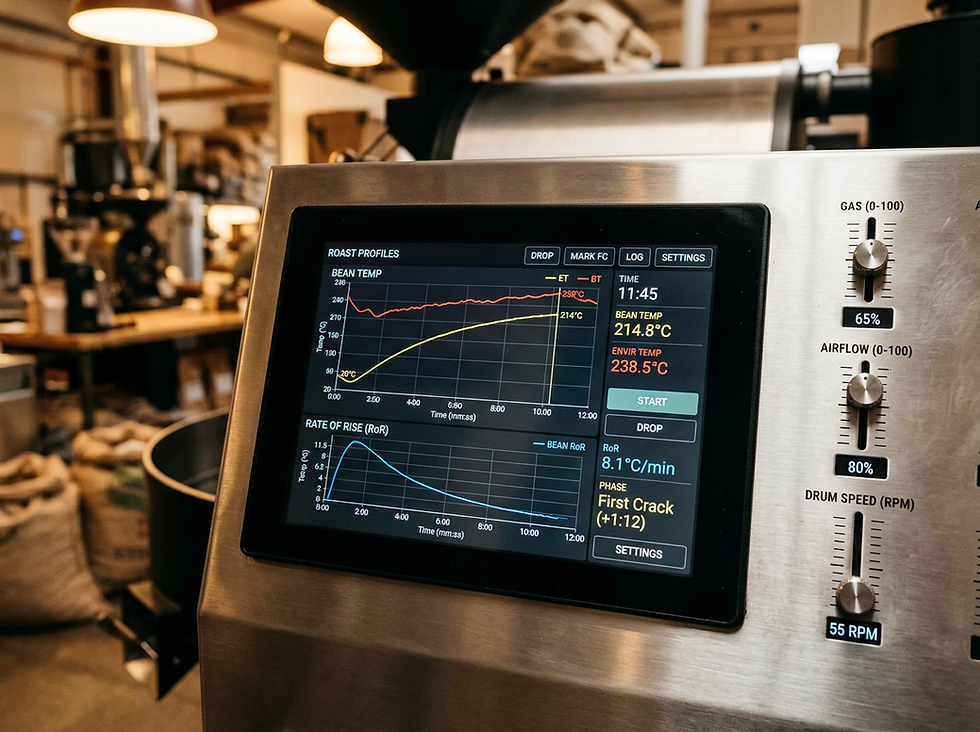
A few degrees at the end of a roast can change a coffee from bright and floral to heavy, smoky, and bitter. That final moment, often called the `Drop`, is where color, temperature, aroma, and development time come together.
Roast level is more than a visual label. Light, medium, medium-dark, and dark roasts describe real physical and chemical changes inside the bean. Color helps identify those changes, but temperature and repeatable records make them controllable.
For roasters, the goal is not simply to make beans darker. The goal is to choose the flavor expression that best fits the coffee’s origin, density, processing method, and intended brew style.

Roast color is a clue, not the whole answer
Roast color is one of the fastest ways to judge where a coffee lands on the development scale. A lighter bean often keeps more of its original fruit, floral, and citrus qualities. A darker bean shows more roast-created flavors such as caramel, chocolate, smoke, and bitterness.
Many roasting teams use tools such as Colortrack devices to measure roast color with more precision than the human eye can provide. This matters because visual color changes with room lighting, tray depth, surface oil, and even fatigue. A bean that looks medium under warm light may look closer to medium-dark under cool light.
Still, color alone cannot explain the cup. Two coffees can reach a similar color but taste different if they followed different roast curves. One may have developed smoothly. The other may taste flat, baked, or scorched because heat was applied poorly.
That is why roast level works best when it combines:
Measured color
Drop temperature
Development time
Rate of Rise
Sensory evaluation after cupping
Together, these markers turn roast level from a guess into a controlled decision.
How common roast levels affect flavor
Drop temperature is the bean temperature recorded at the moment the roast ends. Exact numbers vary by roaster design, probe placement, batch size, airflow, and calibration. Still, the following guide gives a useful working framework for how temperature and color tend to shape flavor.
Roast level | Typical drop temperature | Main flavor traits | Acidity | Body |
Light roast | 205°C, about 401°F | Clean fruit and floral notes, strong origin clarity | Very high | Light |
Medium roast | 215°C, about 419°F | Balanced acidity and sweetness, caramel and nut notes | Medium | Medium |
Medium-dark roast | 220°C, about 428°F | Softer acidity, dark chocolate sweetness, slight surface oil | Low | Full |
Dark roast or Vienna | 225°C+, about 437°F+ | Clear bitterness, smoky or charred notes, shiny surface oil | Very low | Very full |
A light roast preserves the most origin character. Washed Ethiopian coffee may show jasmine, lemon, or stone fruit. A high-grown Central American coffee may taste crisp and sweet, with a tea-like body. The risk is underdevelopment. If heat application is too gentle or the roast is dropped too early, the cup can taste grassy, sharp, or grain-like.
A medium roast often gives the widest balance. Acidity remains present, but sweetness increases. Maillard reactions and caramelization add notes of brown sugar, toasted nuts, and caramel. This range works well for many filter brews and can suit espresso when the coffee has enough solubility and sweetness.
A medium-dark roast moves the focus away from origin clarity and toward roast sweetness. Chocolate, cocoa, and heavier caramel appear more clearly. Acidity drops, and body becomes rounder. Some oil may begin to show on the bean surface, especially after resting.
A dark roast creates a bold cup with low acidity and a heavy mouthfeel. Surface oils become more visible as the bean structure expands and weakens. Bitterness, smoke, and roast flavor dominate. For some profiles, that intensity is desirable. For high-quality single-origin lots, it can cover the qualities that made the green coffee special.
Development time connects color to chemistry
Development time begins after first crack and continues until the drop. This phase has a strong influence on how the final roast tastes, even when the color looks correct.
During development, several changes happen at once. Moisture continues to leave the bean. Sugars break down and brown. Acids transform. Aromatic compounds form and fade. The bean becomes more brittle and easier to extract.
If development is too short, the coffee may taste sour, sharp, or underdeveloped. If it is too long without enough energy, the cup may taste baked, dull, and papery. If heat is pushed too aggressively, smoky and scorched flavors can appear.
The roast level target should guide development, but it should not replace taste. A light roast still needs enough development to become sweet and soluble. A dark roast still needs control so it does not become burnt and hollow.
The best roast level is the one that expresses the coffee clearly while avoiding baked, scorched, or hollow flavors.
Heat application and Rate of Rise control the result
Two controls shape the path toward the final roast level more than almost anything else: heat application and Rate of Rise.
Heat application is the way energy enters the roast. In a gas roaster, this often means flame control, supported by airflow and drum speed. Heat determines how long the bean spends in key chemical phases, especially Maillard reactions and caramelization.
The Maillard phase builds many of the roasted, nutty, and savory-sweet aromas that make coffee complex. Caramelization pushes sweetness deeper and darker. Too little heat can stretch these stages into a flat cup. Too much heat can burn the outside before the inside develops.
Rate of Rise, often written as `RoR`, tracks how quickly bean temperature is increasing. A stable RoR helps reactions move at a controlled pace. A crashing RoR near the end can create baked flavors. A sudden flick can add roast bitterness or harshness.
This is where systems such as Rostino help roasters repeat a successful profile. Instead of relying only on sight, a roaster can end the batch based on a recorded drop temperature from a proven profile. The same target can then be repeated with tighter control across future batches.
Color still matters. Aroma still matters. Sound still matters. But digital temperature records reduce the error that comes from changing light, human perception, and small environmental differences.

Why bean structure changes as roast level increases
As coffee roasts, the bean expands. Gases build inside. Water escapes. The internal structure becomes more porous. This is why darker roasts are often easier to grind and extract faster than light roasts.
A light roast stays denser. Its cell structure remains tighter, so water has a harder time pulling flavor compounds out during brewing. That is one reason light roasts often benefit from finer grinding, hotter water, or longer contact time.
A dark roast is more open and brittle. It extracts more easily, sometimes too easily. If brewed too aggressively, it can produce strong bitterness and a drying finish.
This structural difference explains why roast level should guide brewing choices as well as roasting choices. Color affects flavor in the cup, but it also affects how the coffee behaves with water.
A repeatable roast level needs both instruments and tasting
The most reliable roasters do not choose between data and sensory skill. They use both.
A Colortrack reading can confirm the color range. A Rostino profile can repeat the target drop temperature. RoR data can show whether the roast followed the intended path. Cupping then confirms whether the flavor matches the goal.
That complete loop is what makes roast level repeatable:
Set the intended flavor target.
Build the roast curve around heat and RoR.
Drop at the recorded endpoint.
Measure color.
Cup the result.
Adjust the next batch if needed.
Roast level is where science meets taste. Color shows how far the bean has traveled. Temperature shows when the journey ended. Development time and RoR explain how it got there. When all of them work together, roasting becomes a repeatable craft rather than a visual guess.
The clearest cup comes from control. Choose the roast level that serves the coffee, record it carefully, and let flavor confirm the decision.


Comments