


How Roast Time Shapes Coffee Flavor Quality Fast vs Slow Roast Profiles
A few minutes can change a coffee from bright and juicy to round, sweet, and chocolatey. Roast time is one of the clearest ways a roaster shapes flavor quality, because it affects how long the bean spends building acidity, sweetness, aroma, and body.
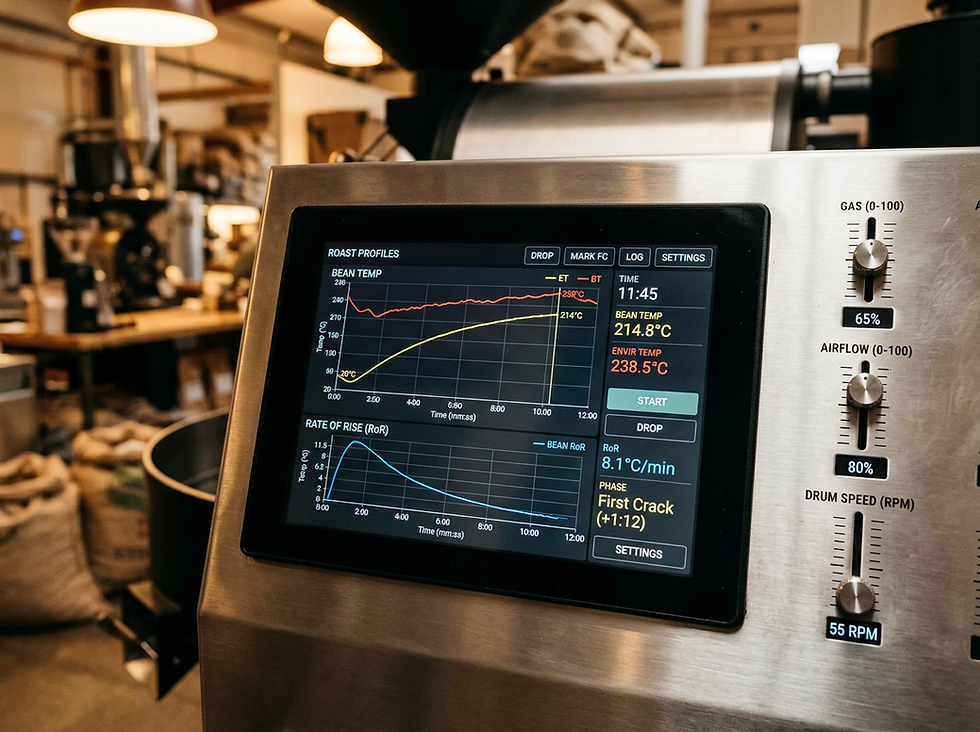
The total roast time matters, but so does the ratio of each stage. Drying, Maillard browning, first crack, and development all leave a mark. A roast that reaches first crack fast will not taste the same as one that spends more time developing sugars and heavier compounds before and after that point.

Roast time controls the balance between acidity, sweetness, and body
Green coffee contains acids, sugars, proteins, and aromatic precursors. During roasting, heat triggers a chain of reactions that turns those compounds into the flavors people describe as citrus, berry, caramel, nuts, cocoa, spice, or toast.
A shorter roast usually keeps more of the coffee’s lively acidity and volatile aromatics. These flavors can feel crisp, floral, and fruit-forward. A longer roast tends to soften acidity and build more sweetness, weight, and darker flavors.
This does not mean fast is always better, or slow is always safer. A roast can be fast and underdeveloped. It can also be slow and flat. The best result comes from matching the roast time to the coffee’s origin, density, processing method, and desired cup profile.
A helpful way to think about it is simple:
Roast profile | Typical time | Flavor direction | Best fit |
Fast roast | 8 to 11 minutes | Bright, fruity, floral, lighter body | High-acidity African coffees |
Slow roast | 13 to 16 minutes | Sweet, chocolatey, spicy, fuller body | Central and South American coffees |
Fast roast profiles highlight bright and delicate flavors
A fast roast, often landing between 8 and 11 minutes, uses a more energetic heat approach. The coffee moves quickly through the early stages and enters first crack with force and clarity.
First crack is the audible point where steam pressure and gas inside the bean cause it to fracture. In a fast roast, this stage often arrives earlier and more assertively. The result is a profile that preserves more of the coffee’s natural acidity and aromatic lift.
Fast roasts often show:
Clean citrus notes, such as lemon, orange, or grapefruit
Berry-like flavors, such as blueberry, raspberry, or black currant
Floral notes, especially in washed Ethiopian coffees
A lighter to medium body
A crisp finish
This style works especially well with coffees from Ethiopia and Kenya, where acidity and fine aromatic detail are often prized. A washed Ethiopian coffee might show jasmine, bergamot, and stone fruit. A Kenyan coffee might lean toward black currant, grapefruit, and tomato-like brightness.
The risk is underdevelopment. If the roast moves too fast without enough internal bean development, the cup can taste grassy, sharp, or hollow. The outside of the bean may look ready, while the inside has not fully transformed. That is why a fast roast still needs enough time after first crack to create sweetness and structure.
For many light roast profiles, the goal is not speed alone. The goal is controlled speed.
Slow roast profiles build sweetness, depth, and body
A slow roast, often around 13 to 16 minutes, gives the coffee more time in the browning phase known as the Maillard stage. This stage creates many of the compounds linked to sweetness, color, aroma, and deeper flavor.
A longer Maillard phase can reduce the sharp edge of acidity and turn the cup toward more rounded sweetness. Instead of lemon or berry standing at the front, the coffee may express caramel, milk chocolate, toasted nuts, baking spice, or cocoa.
Slow roasts often show:
Lower perceived acidity
More caramelized sweetness
Chocolate, nut, and spice notes
Medium to full body
A rounder mouthfeel
This approach often suits coffees from Brazil, Colombia, and other Central and South American origins. Many of these coffees already carry flavors like almond, hazelnut, cocoa, brown sugar, and caramel. A slower roast can strengthen those qualities and give the cup more weight.

The risk with slow roasting is baked flavor. If the roast loses momentum or spends too long at low energy, the cup can taste dull, dry, or papery. Sweetness may fade instead of grow. Good slow roasting needs steady heat transfer, not just extra minutes.
A well-managed slow roast should feel sweet and complete, not tired.
The Maillard stage is where many flavor decisions happen
The Maillard stage begins after the coffee has lost much of its early moisture and starts to yellow and brown. During this phase, sugars and amino acids react to create color and aroma.
For fast roasts, the Maillard stage is shorter. This keeps the coffee lively and transparent. Origin character often feels more obvious. A natural Ethiopian may taste like berries and flowers. A washed Kenyan may taste bright, juicy, and complex.
For slow roasts, the Maillard stage is longer. This gives the cup more bass notes. Flavors move toward caramel, nuts, chocolate, and spice. Body increases, and acidity becomes softer.
The balance is delicate. Too little Maillard development can make coffee taste thin. Too much can blur origin character. The roaster’s job is to decide which qualities deserve the spotlight.
Development time shapes the finish after first crack
After first crack begins, roasters often track development time, which is the time from first crack to the end of the roast. This stage affects sweetness, roast flavor, and aftertaste.
A shorter development phase can protect floral and fruit notes, but it must still allow the bean to finish properly. A longer development phase can add roundness and sweetness, but too much can mute acidity and introduce smoky or roasty notes.
For a fast roast, development may be kept relatively brief to preserve brightness. For a slow roast, development may be extended slightly to build body and sweetness. The exact timing depends on the coffee and the roast level.
This is where How Roast Time Shapes Coffee Flavor Quality Fast vs Slow Roast Profiles becomes practical rather than theoretical. Two coffees can finish at the same color and still taste different because one reached that color quickly while the other developed slowly.
Matching roast time to origin improves the cup
A good roast profile starts with the bean.
For African coffees, especially dense washed coffees from Ethiopia or Kenya, a faster roast can protect the acidity and delicate aromatics that make these origins distinctive. The cup can feel clear, bright, and expressive.
For coffees from Brazil, Colombia, Guatemala, or similar profiles, a slower roast can create the structure many drinkers expect. It can support chocolate, caramel, nuts, and spice while giving the cup a fuller feel.
The best roasters do not force every coffee into one style. They ask what the coffee already offers, then choose a roast path that makes those qualities easier to taste.
The takeaway for better roasting and better tasting
Fast roast profiles tend to preserve acidity, fruit, flowers, and clarity. Slow roast profiles tend to build sweetness, chocolate, spice, and body. Both can produce excellent coffee when the roast has enough energy, enough development, and a clear flavor goal.
The real measure is the cup. If the coffee tastes sharp, grassy, or hollow, it may need more development. If it tastes flat, dry, or muted, it may have spent too long in the wrong part of the roast.
Roast time is not just a number on a profile sheet. It is one of the main tools for turning green coffee into a clear, balanced, and memorable cup.


Comments